
From the sharp spires of spruce and fir at the edge of ocean cliffs, to mountain forests, cedar swamps, maple meadows, and pine barrens, Acadia National Park would not be Acadia if not for the trees. The most common ecosystem across the park, forests support a diversity of wildlife, protect lakes and streams, and clean the air. These forests are special for many reasons. Located in a transition zone between warm temperate forest and cool boreal forest, between mountains and the sea, Acadia’s trees support a unique assemblage of plants, animals, lichen, and moss. Under Wabanaki care for millennia, trees inspired action that resulted in conservation of what became Acadia National Park. Today, Acadia hosts some of the oldest and healthiest woodlands in the Eastern United States, but their future is uncertain. Hear a few of these stories and celebrate the release of the new book, Trees of Acadia: The Past, Present, and Future of Park Forests, published by Down East Books.
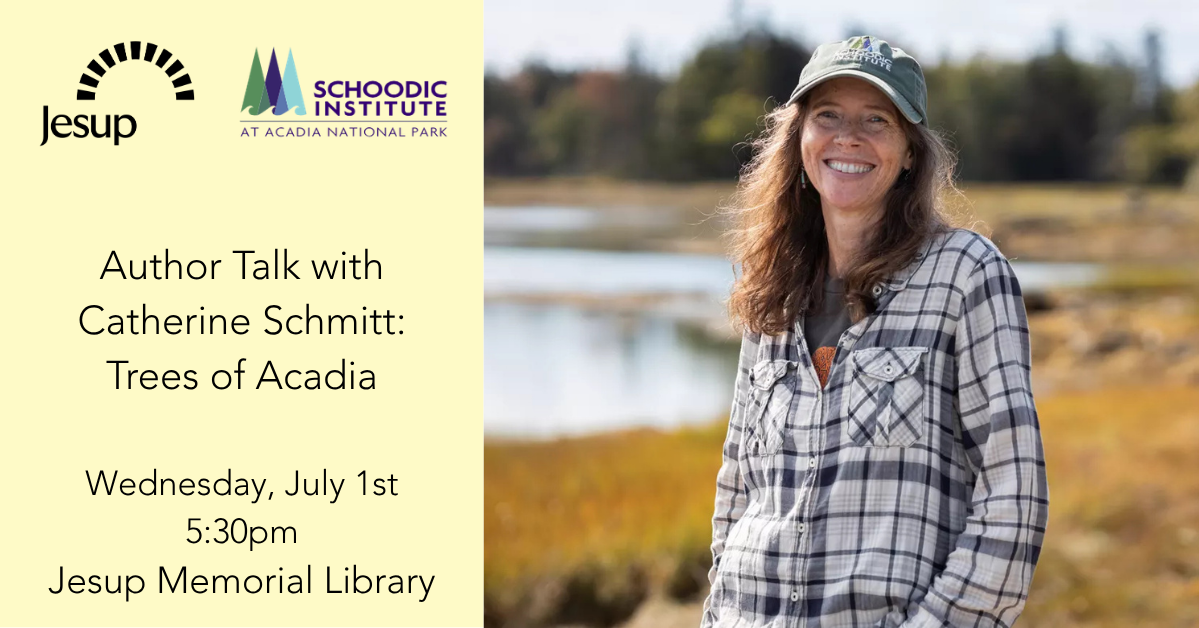
On Wednesday, July 1st at 5:30pm, author Catherine Schmitt will appear at the Jesup Memorial Library for a book launch and reading from Trees of Acadia. Copies of the book will be available for sale, courtesy of Sherman’s Books.
Catherine Schmitt is a science communication specialist with Schoodic Institute at Acadia National Park.